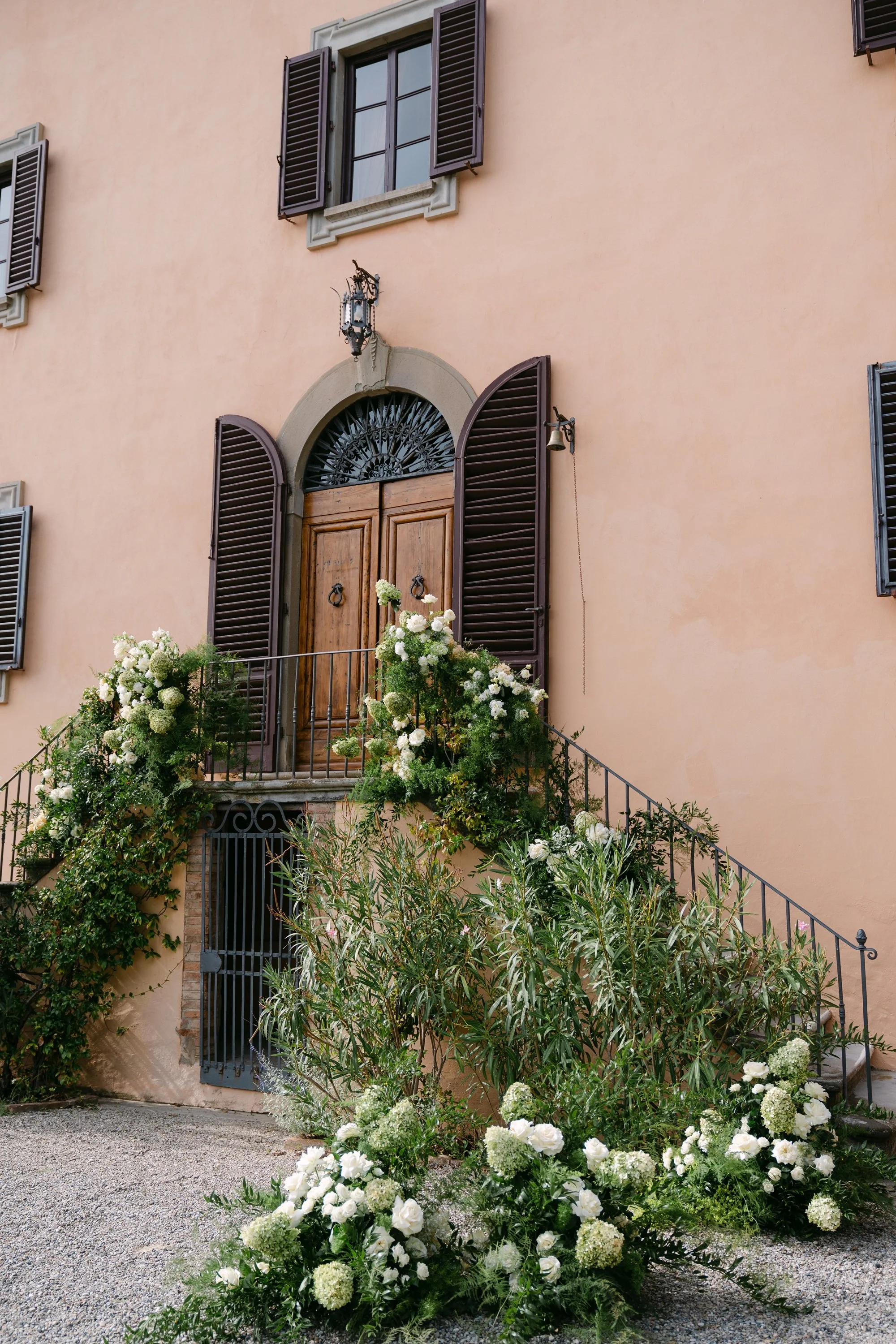
Do You Need to Visit Europe Before Booking Your Destination Wedding Venue?
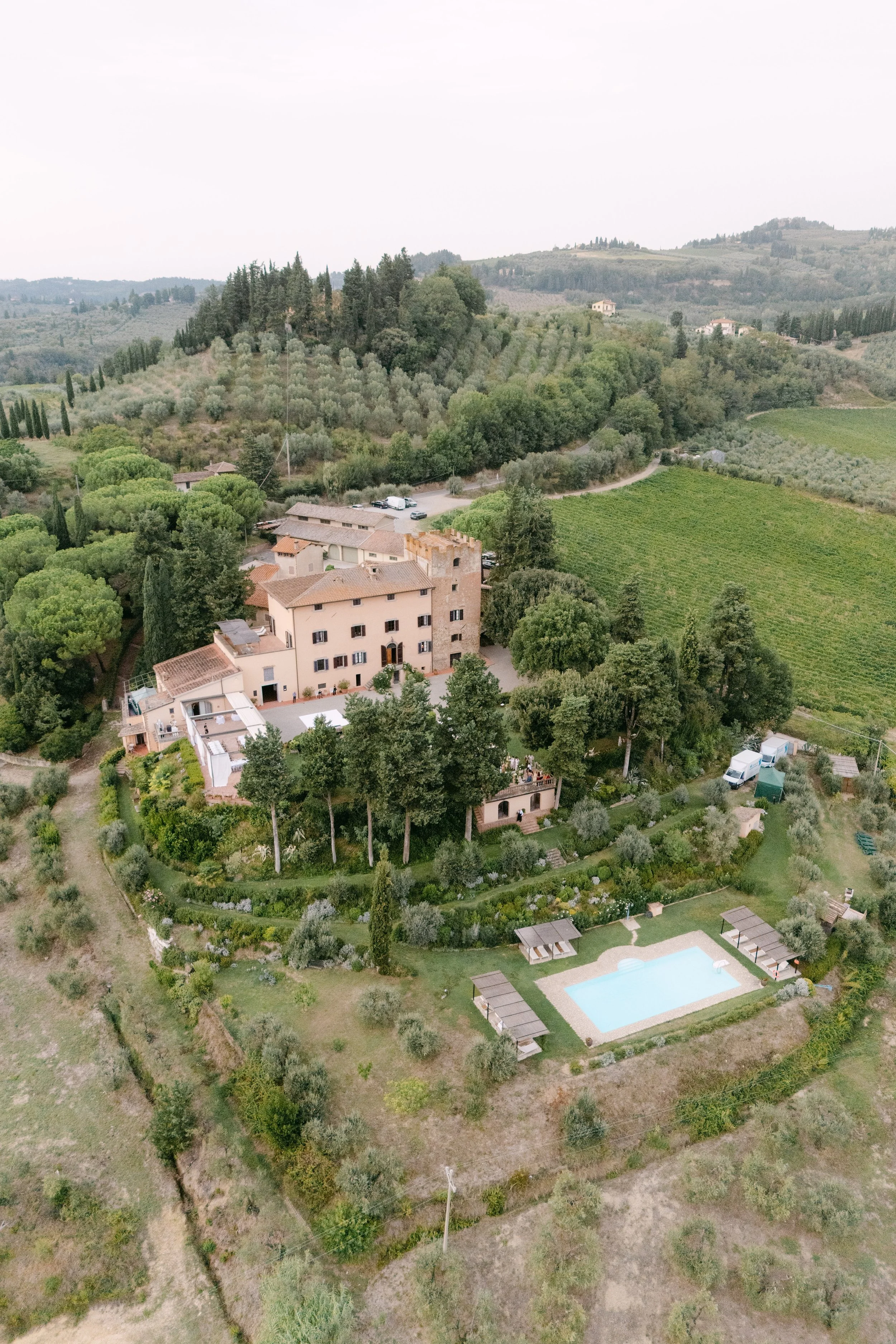
Imagery by Angigraphy
For US couples planning a destination wedding in Europe, one of the first questions we are often asked is whether you need to visit potential venues in person before committing to one.
The short answer is no.
A site visit can be incredibly valuable, but it is not always necessary before securing your wedding venue. Many couples successfully book a property from the US, particularly when work schedules, travel or venue availability make an immediate trip to Europe impractical.
What is important is understanding the venue far beyond how it appears online.
Choosing a destination wedding venue means considering the property itself, how the spaces will work with your guest count, the surrounding destination and importantly, the experience of the people traveling across the Atlantic to celebrate with you.
For a destination wedding, the venue is never simply a beautiful backdrop. It becomes the anchor for an entire weekend.
Look Beyond Instagram
Instagram, TikTok and Pinterest are often where the search for a destination wedding venue begins, and they are an incredible way to discover properties you may otherwise never have known existed.
A private estate in Provence, a historic villa overlooking Lake Como, a finca in Mallorca or a coastal property in Greece can capture your attention within seconds. But social media is designed to show you the most beautiful perspective of a space, not necessarily the most useful one.
The photographs you save may show an extraordinary ceremony lawn at golden hour or a candlelit dinner beneath the trees. They are less likely to show you where 130 guests arrive, whether coaches can access the property, how far everyone needs to move between spaces, where catering operates or what happens if the weather changes.
This is why we encourage couples to treat social media as a starting point rather than the complete picture.
Before booking a wedding venue in Europe, look at full celebrations that have already taken place there. Follow the wedding from guest arrival through ceremony, cocktail hour, dinner and the after-party. Look at different seasons, guest counts and layouts. Seeing the property used in several different ways gives you a far more realistic understanding of how it functions than a collection of individual photographs ever could.
Sometimes a venue that appears expansive online feels considerably more intimate in reality. Other properties have extraordinary gardens, terraces or interiors that rarely receive the same attention online but completely change what is possible.
The objective is to understand the venue as an experience, not simply as a collection of beautiful photographs.
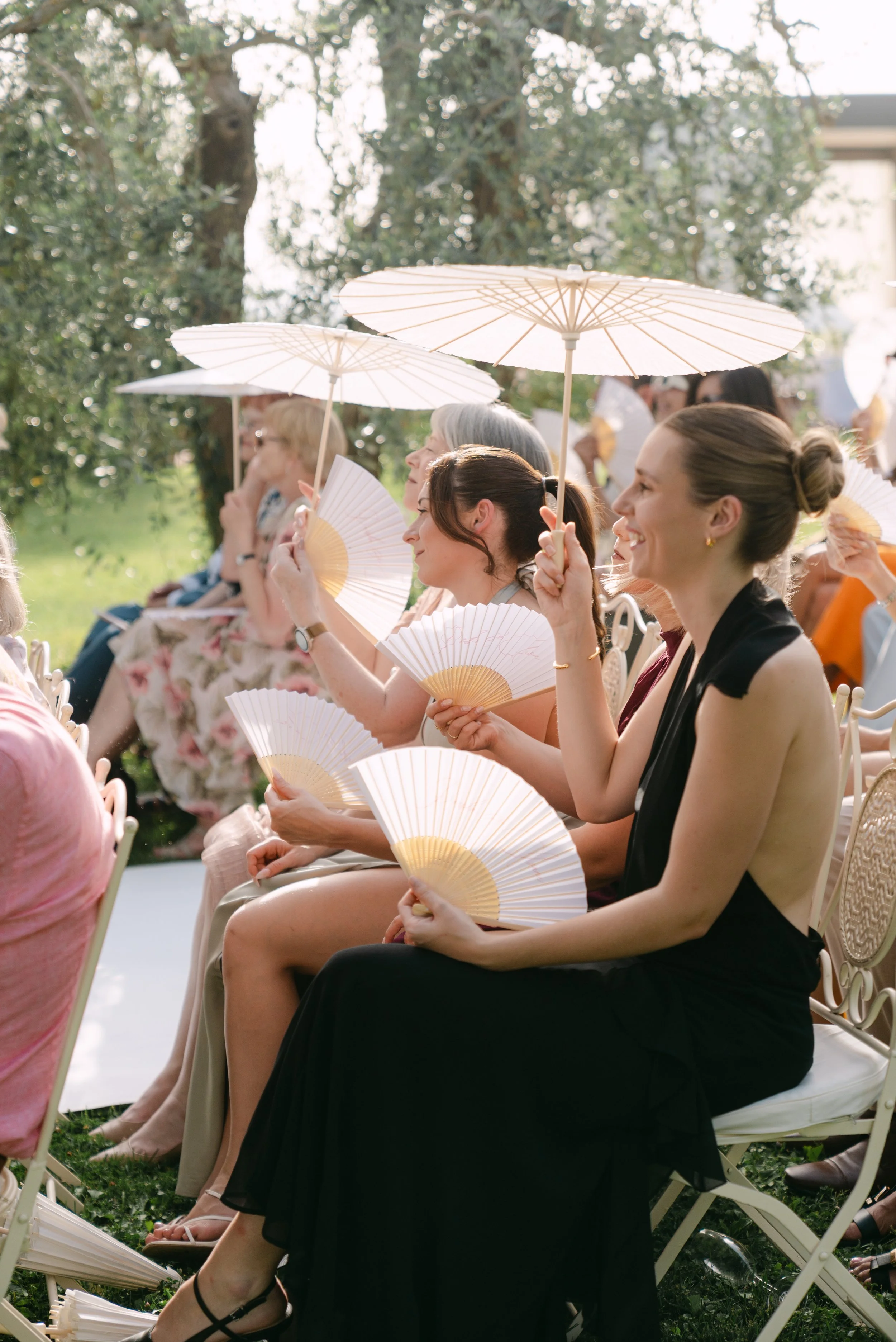
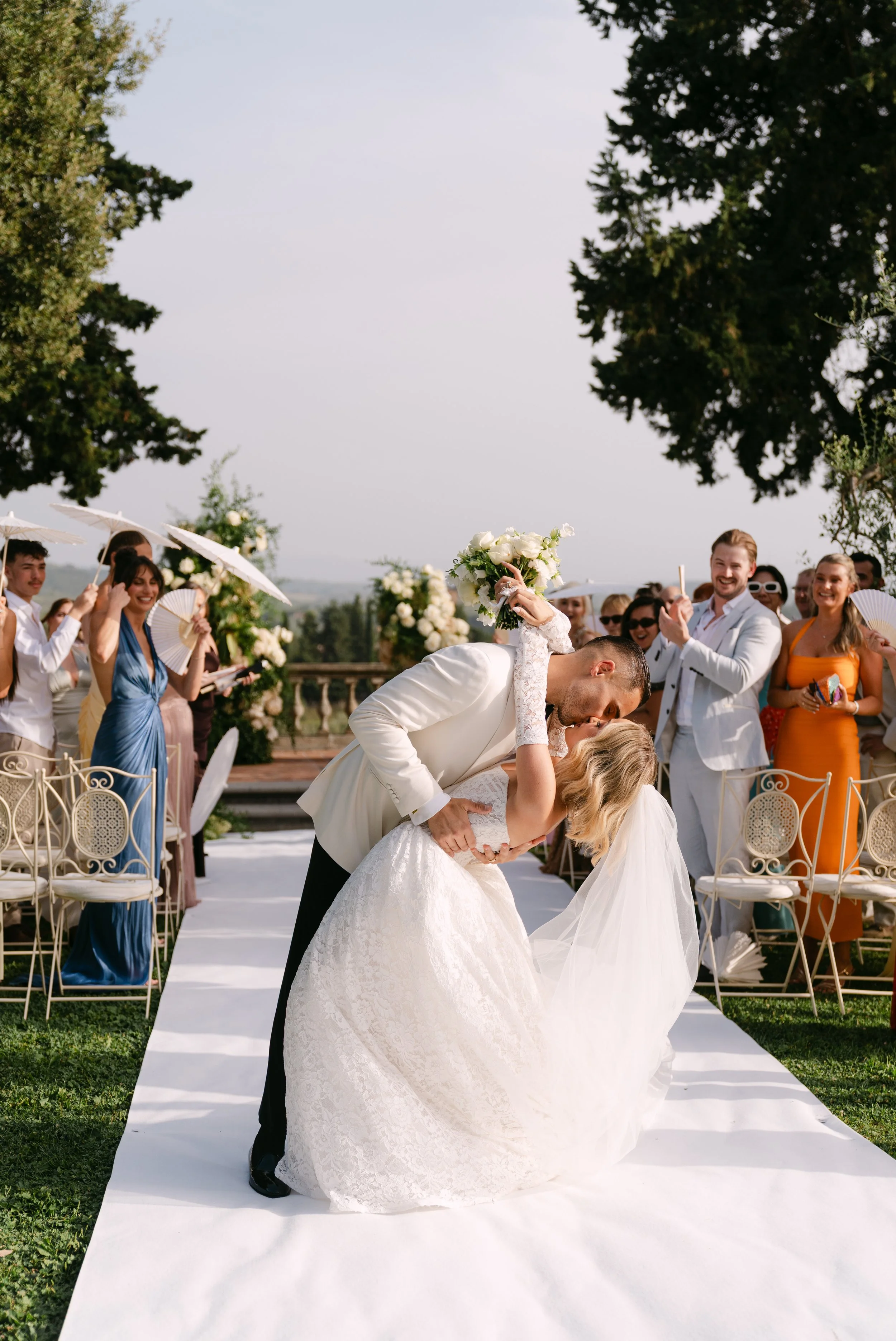

Understand How the Spaces Actually Work
One of the most important distinctions when reviewing European wedding venues is the difference between capacity and comfortable capacity.
A property may advertise that it can accommodate 180 guests, but that does not necessarily mean every part of the venue works beautifully for 180 people.
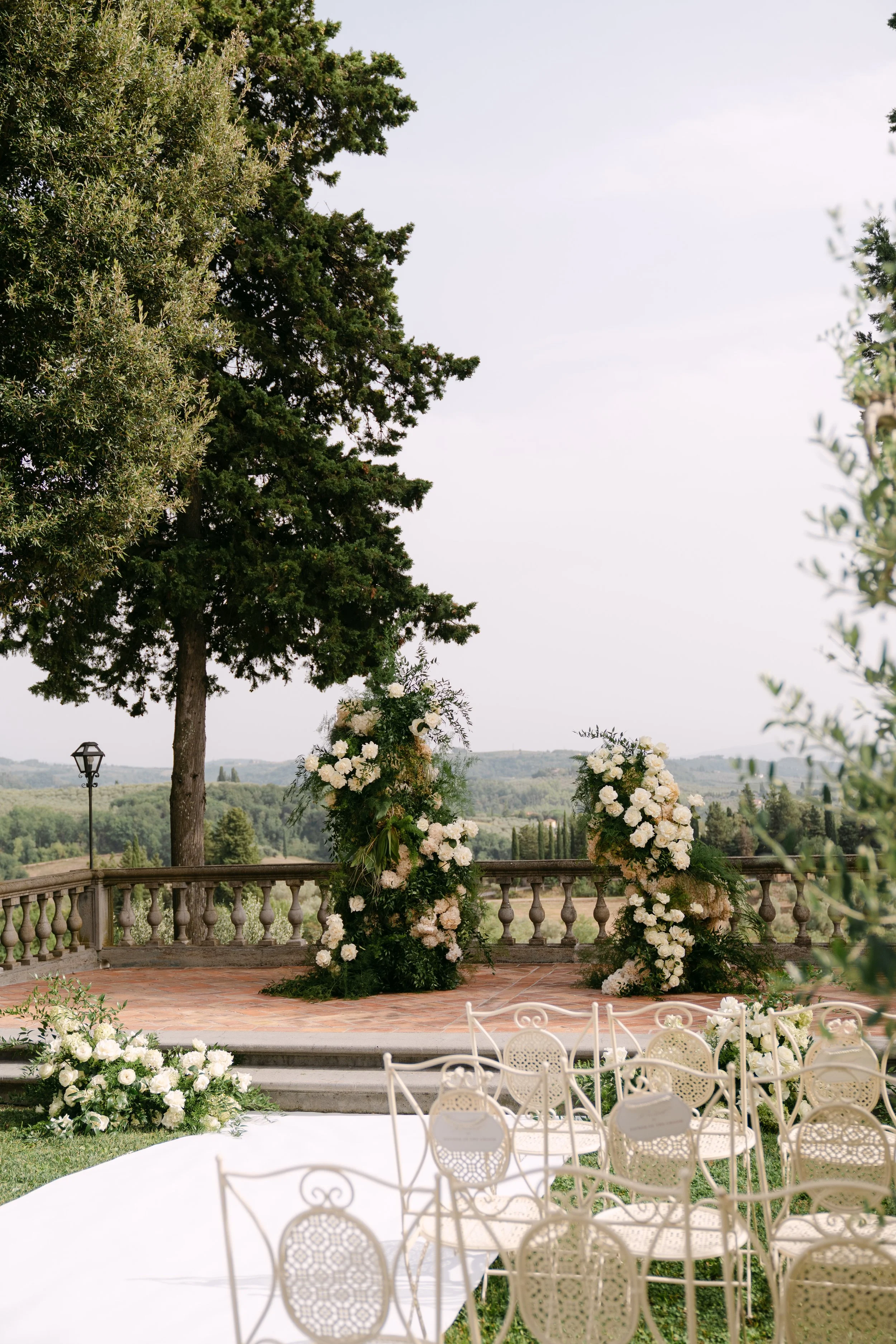
The ceremony garden may comfortably accommodate your guest list, while the terrace you have imagined for dinner is far better suited to 120. An outdoor reception space may work perfectly, but the indoor rain plan could require a completely different layout. Once a stage, dance floor, bars, catering infrastructure and production are introduced, the usable footprint of a space can change considerably.
For us, the question is never simply, can everyone fit?
It is whether the venue allows the wedding to unfold in the way you want it to.
Before securing a destination wedding venue, there should be clarity around:
- the realistic capacity of each space you intend to use
- how guests move between ceremony, cocktails, dinner and dancing
- whether the rain plan genuinely works for your full guest count
- where catering, entertainment and production will operate
- curfews and noise restrictions
- transportation and coach access
- furniture and equipment included with the property
- accommodation requirements or minimum stays
- any restrictions around outside vendors
These details are particularly important in Europe, where many of the most extraordinary wedding venues are historic villas, châteaux and private estates that were never designed as modern event spaces.
That history is often precisely what makes them so special. It simply means understanding how the property functions becomes even more important.
For US Couples, Consider the Journey Before the Wedding
When guests are traveling internationally, accessibility should form part of the venue decision from the beginning.
It is easy to look at a property on a map and see that it is “near Florence” or “in the South of France.” What matters is what that actually means for someone leaving New York, Miami, Boston, Chicago or Los Angeles.
For many East Coast guests, reaching a major European city can mean a relatively straightforward overnight nonstop flight. The experience after landing, however, varies considerably. One venue may be less than an hour from a major international airport, while another requires a European connection followed by a two-hour drive, ferry or boat transfer.
Neither is necessarily better.
Some of Europe’s most exceptional wedding destinations require a little more effort to reach, and that sense of escape can be part of their appeal. What matters is understanding the journey before committing to the venue.
We consider where the majority of guests are traveling from, whether practical nonstop or one-stop flight options exist, which airport guests are most likely to use and what happens once they arrive.
For a New York-based guest list, for example, a destination with strong transatlantic access may allow guests to leave the US in the evening and arrive in Europe the following morning. A more remote destination may add another flight or several hours on the road. That should influence the wider itinerary, from when hotel rooms are available to when the first event begins.
It is also worth allowing for the reality of an overnight international flight. Scheduling an elaborate welcome dinner too soon after the majority of guests arrive may look perfectly reasonable on paper and feel very different to the people attending it.
The guest experience begins well before the ceremony.
If someone has flown across the Atlantic, connected through another city and then traveled another two hours to reach the destination, the way the weekend is structured once they arrive matters.
You Are Choosing the Destination Around the Venue, Too
One of the biggest differences between planning a wedding at home and planning a destination wedding in Europe is that your guests are not simply attending a wedding. For several days, they are experiencing a destination.
That makes the area surrounding the venue almost as important as the property itself.
- Where will everyone stay?
- How far are the hotels from the venue?
- Is there enough accommodation at the level you want for your guests?
- Can they walk into a town or village for lunch, spend an afternoon at a beach club or explore independently?
- Is there somewhere appropriate for a welcome event the evening before the wedding and a recovery lunch the following day?
A château in Provence, a villa on Lake Como, an estate in Mallorca and a coastal property in Greece can all be extraordinary settings, but the experience of spending three or four days in each destination is entirely different.
For couples bringing guests from the US, this becomes particularly important. Once people have committed to international travel, we want the destination to feel worth arriving early for and worth experiencing beyond the wedding day itself.
There is a logistical consideration here too. If the majority of guests are staying 45 minutes from the venue, transportation becomes a significant component of the weekend. If accommodation is spread across several towns, multiple routes may be required. If everyone is staying within one central area, arrivals and departures can often be managed far more seamlessly.
There is no single correct structure. What matters is knowing what the venue and destination will require before you sign the contract.


Accommodation Can Change the Entire Weekend
Accommodation is one of the areas we encourage couples to investigate carefully before booking a European wedding venue.
Some properties allow a large proportion of the guest list to stay together onsite, creating an immersive private-estate experience across several days. Others may offer only a handful of rooms, with guests staying in hotels throughout the surrounding region.
Both can work beautifully, but they create very different wedding weekends.
If accommodation is offsite, look beyond distance alone. Consider the standard of the hotels available, room inventory, seasonal availability and how concentrated those properties are within the area.
Ten excellent hotels within a 15-minute radius gives you considerably more flexibility than a venue where suitable accommodation is scattered across several towns.
For guests who have already traveled internationally to attend the wedding, asking them to spend another hour in transportation at the beginning and end of each event can materially change how the weekend feels.
It is one of the reasons we rarely consider a wedding venue in isolation. The accommodation strategy, transportation plan and wider destination sit alongside it.
Study Weddings That Have Already Happened There
Past weddings are one of the most valuable resources available when evaluating a venue remotely, and we always recommend looking at more than one.
Different celebrations begin to reveal how the property genuinely operates. You can see which spaces are best suited to larger guest counts, how dinner layouts change, where ceremonies tend to take place, what the venue looks like in different months and how other planners have approached the flow of the day.
Patterns can be informative too.
If every wedding of a certain size uses one particular area for dinner, there is probably a practical reason. If an interior room is promoted as a rain option but is rarely shown hosting weddings of your size, it is worth understanding why.
This is also where having a planner who understands destination weddings, and ideally the venue or region itself, becomes particularly valuable.
A floor plan can tell us the dimensions of a courtyard. Experience helps determine how that courtyard will feel with 120 guests, where the sun will be during cocktail hour, how service enters the space, whether sound restrictions affect the evening and what happens once production is installed.
Those are very different levels of understanding.
The Less Glamorous Questions Are Often the Most Important
A venue can be extraordinary and still be completely wrong for the wedding you are planning.
Some of the information that matters most will never appear on Instagram or within the first few pages of a venue brochure.
- What time must amplified music finish?
- Can dancing continue indoors afterward?
- Is there sufficient power for the production you are considering, or are generators required?
- Is there an appropriate catering kitchen?
- Can large vehicles access the property?
- Are there mandatory suppliers?
- Does the venue require a full property buyout?
- What is the genuine Plan B in poor weather?
These questions can also have a significant impact on budget.
Two European wedding venues with similar rental fees can ultimately require completely different levels of investment. One may include furniture, infrastructure and accommodation, while another requires kitchens, generators, extensive rentals, guest transportation and production to be brought in separately.
Understanding these details before booking is far more valuable than discovering them six months into planning.
It also allows you to compare venues properly. The rental fee is only one part of what it costs to transform a property into the wedding you have imagined.
Why Destination Wedding Experience Matters
When choosing a venue from thousands of miles away, the person advising you should be looking at considerably more than aesthetics.
For us, the venue search is about understanding how the complete celebration will work once the guest list, logistics, hospitality, design and production are layered into it.
That perspective is particularly important for US couples because the wedding weekend often begins the moment guests leave home.
We are thinking about where they fly into, what their arrival experience looks like, where they stay, how easily they reach each event and whether there is enough time within the weekend for them to actually enjoy being in Europe.
A beautiful ceremony matters. So does what happened in the 48 hours before it.
A thoughtfully planned destination wedding should feel effortless to the guest precisely because so much consideration has gone into what happens behind the scenes.
So, Do You Need to Visit Europe Before You Book?
If your schedule allows you to visit a shortlist of venues before making a decision, there is absolutely value in doing so. Experiencing the scale of a property, walking between spaces and spending time in the surrounding destination can give you a perspective that photographs cannot entirely replicate.
But we would not consider it essential.
If you have found a venue that genuinely suits your guest count, wedding vision and destination, and you have the right information and guidance around it, it is entirely possible to confidently book a wedding venue in Europe from the US without visiting first.
There are also circumstances where waiting to travel can work against you. Sought-after European wedding venues can secure prime dates well in advance, particularly across Italy, France, Greece and Spain. Delaying a decision for several months simply to make a site visit can mean compromising on the venue or wedding weekend you prefer.
A site visit can also become considerably more productive once the venue has been secured.
Instead of spending the trip deciding where to get married, you can use that time to plan how the wedding will happen. You can walk through the guest journey, review layouts, experience the destination, meet key vendors, taste menus and explore locations for the welcome event and recovery day with the wedding already taking shape.
Ultimately, you do not need to stand inside a European wedding venue before you book it.
But before you sign, you should understand the property, the destination and the experience it will create for your guests as though you have.